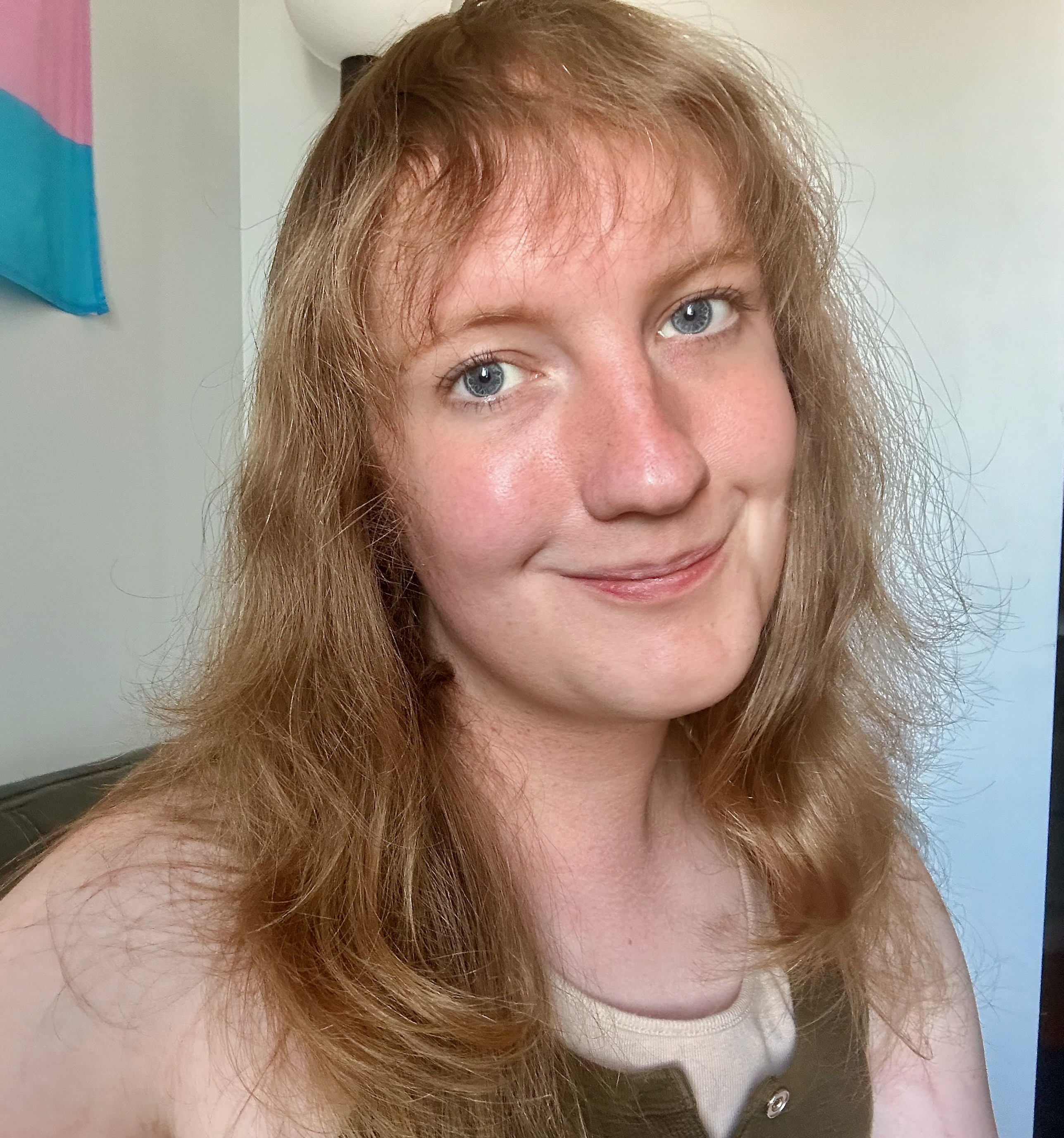
Hi, I'm Victoria. I teach machine learning at San Francisco State University, where I designed the intermediate ML course for the PINC program, and I build open-source tools — mostly for reading, note-taking, and personal infrastructure. Based in San Francisco.
Follow me on LinkedIn, or see some of my work on GitHub!
In my free time, I like reading, playing Paradox map games, going on walks around the city, and playing with my terminal.
ResumeMachine learning practitioner and teacher: lecturer for CSC 411 (Intermediate Machine Learning) at San Francisco State University, after a year in R&D data operations for an AI/robotics company. B.S. Computer Science, SFSU; U.S. Air Force veteran.
Teacher and builder of machine learning. B.S. in Computer Science from San Francisco State (December 2025). I currently lecture CSC 411 (Intermediate Machine Learning), the course I designed and built over the spring and summer for its first offering this fall, after serving as instructional assistant for CSC 511 (Protein Modeling with Deep Learning). Before that, R&D data operations for an AI/robotics company, and five years in Air Force munitions systems. I build and maintain volunteer-run civic infrastructure and open-source software.
Teaching & Experience
Lecturer — CSC 411: Intermediate Machine Learning for Interdisciplinary Data Scientists — San Francisco State University, Fall 2026 – present
Teaching the first offering of the fifteen-week course I designed: meeting students at matrix multiplication and arriving at a working transformer encoder, with gradient descent, backpropagation, and attention each derived and implemented from scratch before PyTorch & Lightning are introduced.
R&D Operations Coordinator (Contract, via Lumicity) — Confidential AI/robotics client, San Francisco, February – August 2026
Supervised the operators and data-collection devices that produced model training data; managed operator scheduling and training, device readiness, and dataset QA. When a key dataset metric collapsed mid-season, redesigned collection around diversity and brought it back.
Instructional Assistant — CSC 511: Protein Modeling with Deep Learning — PINC Program, San Francisco State University (Instructor: Dr. Will Thrift), December 2025 – May 2026
Led a twice-weekly recitation for ~40 life-science students building protein-property-prediction models in PyTorch and Lightning — most meeting deep learning for the first time. Wrote the course’s Jupyter notebook tutorials for AlphaFold2-inspired architectures; debugged alongside students from model logic down to the GPU-memory and environment problems that stall a first deep-learning course.
Chapter Co-Chair (volunteer) — Democratic Socialists of America, San Francisco, 2021 – 2024
Ran the chapter’s technical infrastructure end to end: three servers (DigitalOcean, AWS), fifteen Docker microservices managed via Portainer, Auth0 identity management, and CRM/publishing integrations (Ghost, WordPress, Zapier). Trained volunteers on data-pipeline and campaign tools (NationBuilder, Action Network, Mobilize, CallHub, Google Workspace).
U.S. Air Force — Munitions Systems (Crew Chief, then Inspector), 2016 – 2021
As inspector, discovered hazard-tracking errors across databases covering $400M in guided munitions, triggering a global technical-data update; served as military liaison to Boeing and Raytheon engineers. Led 2–8 person maintenance & production teams; authored, managed, & maintained 120+ technical-operational documents.
Selected Projects
- Tailscale for KOReader — Brought VPN support to ARM e-ink readers, where none existed: cross-compiled Tailscale for the platform and wrote the Lua plugin integrating it into KOReader. 121 GitHub stars; maintained through versioned releases with community contributors.
- Cairn — Attention-driven classification engine: a learned controller selects cheap computation to classify unfamiliar repositories, note vaults, and document collections, inverting the economics — classification cheaper than generative inference, shapeable to any domain. Python; CLI, TUI, and web.
- Alzheimer’s Screening Classifier — Led a three-person team building a recall-first Random Forest in R: wrote the cross-validated grid search selecting for sensitivity rather than accuracy, and shifted the forest’s voting cutoff toward detection — cutting missed diagnoses 68% at a cost of 0.65 points of accuracy.
- SerialPM — Led five undergraduates through the architecture, code review, and deployment of a visual project-management tool (Node.js/React/TypeScript).
Education
B.S., Computer Science — San Francisco State University (December 2025). Prior CS coursework at City College of San Francisco — Dean’s Honor List, Fall 2022.
Skills
Python (PyTorch, Lightning, scikit-learn, pandas, NumPy), R, C, C++, Rust, TypeScript/JavaScript, SQL, Bash, Lua. Linux, Docker, systemd, cross-compilation, embedded ARM, CI/CD, Git, PostgreSQL/PostGIS, MapLibre, Jupyter, LaTeX.
Knowledge Graphs and Structured Intelligence — essays on this site.
TeachingLecturer for CSC 411 (Intermediate Machine Learning) in the PINC program at SFSU: teaching the first offering of the course I designed, from matrix multiplication to a from-scratch transformer encoder.
I teach machine learning at San Francisco State University, in the PINC program: a computing minor built for biology, biochemistry, and chemistry students. I designed its intermediate machine learning course and now teach its first offering.
CSC 411: Intermediate Machine Learning for Interdisciplinary Data Scientists
The course takes students with no calculus, linear algebra, or machine learning background and walks them, principle by principle, from matrix multiplication to a working transformer encoder built from scratch. Each operation of deep learning is derived and implemented by hand before the libraries arrive: a training loop, an MLP layer, an attention head, composed into the architecture behind modern language models.
Format: twice a week, a lecture and a hands-on lab. The weekly notebook is the unit of work, with only a small graded check at the end of each one. Students run a portfolio project on a dataset of their own choosing, with checkpoints across the term and a written self-analysis at the end. They also read and discuss real machine learning papers, matched to the level of model they have just built.
Principles that shape the course:
- Meet students where they are. No prerequisites assumed; the math is taught as it is needed.
- Derive before you delegate. You can only trust a model you can take apart.
- Grade for understanding, not mechanical completeness. Clarity about what is scored is itself a form of care.
- The artifact is the point. Students leave with a model they built and a project that is theirs.
Before teaching this course I was an instructional assistant for CSC 511 (Protein Modeling with Deep Learning), leading recitations for life-science students building protein models in PyTorch and Lightning.
Work HistoryProfessional experience spanning university teaching, R&D data operations for an AI/robotics company, network contracting, volunteer technical leadership, and U.S. Air Force munitions systems.
| Company | Position | Key responsibilities | Timeframe |
|---|---|---|---|
| San Francisco State University | Lecturer, CSC 411: Intermediate Machine Learning (PINC Program) | Teach the first offering of a course I designed: fifteen weeks from matrix multiplication to a from-scratch transformer encoder, with weekly lectures and hands-on labs, and a checkpointed portfolio project on each student’s own dataset. | Fall 2026 — present |
| Confidential AI/robotics client, San Francisco (contract via Lumicity) | R&D Operations Coordinator | Supervised the operators and data-collection devices producing model training data; managed scheduling, training, device readiness, and dataset QA. Redesigned collection around diversity after a key dataset metric collapsed. | Feb 2026 — Aug 2026 |
| San Francisco State University, PINC Program | Instructional Assistant, CSC 511: Protein Modeling with Deep Learning | Led twice-weekly recitations for ~40 life-science students building protein models in PyTorch and Lightning; wrote the course’s Jupyter notebook tutorials; debugged alongside students from model logic down to GPU-memory and environment issues. | Dec 2025 — May 2026 |
| Property management company, San Francisco | IT Contractor (hourly) | On-call network support dispatched per property: installed and configured mesh Wi-Fi, resolved ISP hookups (Sonic, Xfinity). | Dec 2023 — Feb 2025 |
| Democratic Socialists of America, San Francisco | Chapter Co-Chair (volunteer) | Ran the chapter’s technical infrastructure end to end (servers, Docker microservices, Auth0, CRM and publishing integrations); trained volunteers on data-pipeline and campaign tools. | 2021 — 2024 |
| U.S. Air Force | Munitions Systems (Crew Chief, then Inspector) | Led 2–8 person maintenance and production teams; as inspector, discovered hazard-tracking errors across databases covering $400M in guided munitions, triggering a global technical-data update; authored and maintained 120+ technical-operational documents; built SQL and Access reporting tools. | 2016 — 2021 |
Notes on Roles & Transferable Skills
- Teaching & Curriculum Design: designed and built a university machine learning course from scratch, and taught it to interdisciplinary students with no math prerequisites; led recitations and wrote course notebooks for a deep learning course for life-science students.
- Leadership & Teamwork: supervised small technical teams, coordinated cross-organizational workstreams, trained personnel and volunteers, and led student project teams.
- Documentation & Communication: authored formal technical documents and operational reports; writes about machine learning, systems, and teaching.
- Systems Thinking: experience maintaining safety-critical tracking systems, debugging multi-system workflows, and automating repetitive tasks; comfortable at every level from GPU memory to database reporting layers.
- Technical Growth: ongoing work in machine learning, curriculum development, and open-source tooling.